Happy Anytime: A Display Font That Brings Warmth to Real Business Branding
Last Tuesday, I sat at my kitchen table—coffee cooling beside me—staring at a stack of new candle labels for my friend Maya’s small-batch soy candle business. She’d just launched three new scents: “Sunrise Grove,” “Cozy Hearth,” and “Salt & Sky.” The ingredients and safety info were spot-on, but something felt off. The current font looked stiff, generic, almost apologetic. It didn’t reflect the care in her hand-poured wax, the soft linen tags, or the gentle way she describes each scent in her Instagram stories. That’s when I reached for Happy Anytime.
A Font That Feels Like a Smile You Can Hold
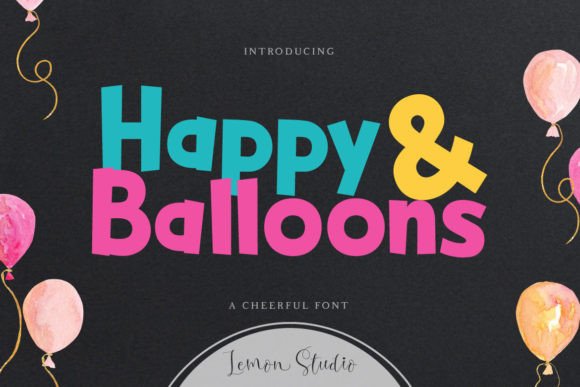
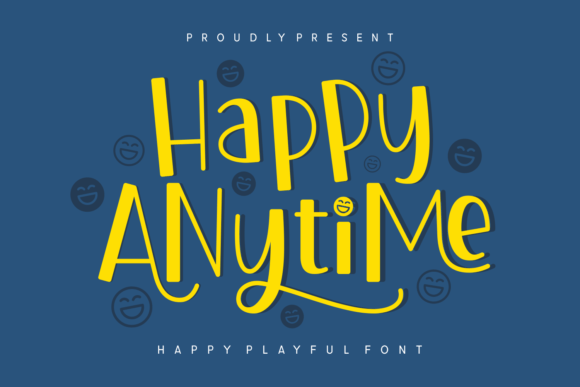
Happy Anytime is a joyful, modern display font—light on its feet but full of personality. It’s not cartoonish or overly bubbly; instead, it balances rounded, friendly letterforms with clean, confident spacing and subtle character. Think of it as the typographic equivalent of a warm handshake: approachable, sincere, and quietly polished. The lowercase ‘a’ and ‘g’ have gentle open shapes, the ‘y’ has a playful tail, and the uppercase letters carry just enough presence to command attention without shouting.
What makes Happy Anytime especially useful for small businesses is how easily it communicates tone. In branding, tone isn’t just about words—it’s about texture, rhythm, and visual warmth. When printed on a kraft paper candle label, Happy Anytime softened the contrast between handmade authenticity and professional polish. On a bakery’s seasonal pastry box (“Honey-Lavender Scone”), it added charm without sacrificing legibility. And on a boutique’s woven clothing tag? It made the brand feel both intentional and human.
Where Happy Anytime Shines (and Where to Use It Thoughtfully)
This is a display font—not a workhorse text face—and that’s its strength. Happy Anytime excels where you want to invite attention, evoke feeling, or anchor a visual moment: logo lockups, product names, shop banners, social media headers, thank-you card titles, and packaging accents. It’s ideal for short, high-impact phrases—not long paragraphs or fine-print ingredients.
I tested it across real materials:
- Labels & packaging: Printed at 14–18pt on matte sticker stock, Happy Anytime held crisp detail and retained its charm—even at smaller sizes on 2 oz candle jars.
- Menus & flyers: Used for section headers (“Our Daily Specials,” “New Arrivals”) alongside a clean sans serif body font, it created instant visual hierarchy and warmth.
- Social graphics: On Instagram templates, it stood out clearly in thumbnails and story banners—especially against soft neutral or muted pastel backgrounds.
- Digital shop banners: Paired with ample white space and a restrained color palette, it gave an online storefront a cohesive, considered look—no extra design flourishes needed.
One note on readability: avoid using Happy Anytime below 12pt in print or on mobile screens for critical information (like contact details or disclaimers). Its joyful curves soften at tiny sizes—but that’s okay. Let it do what it does best: lead with feeling, then let a simpler font handle the supporting role.
Simple Pairings That Build Trust and Consistency
Typography builds consistency—and consistency builds trust. Happy Anytime pairs beautifully with typefaces that ground its energy. My go-to combos:
- A warm sans serif (like Poppins, Inter, or Montserrat) for body text, pricing, and descriptions—clean, legible, and quietly modern.
- A delicate serif (such as Playfair Display or Cormorant Garamond) for elegant contrast—great for beauty brands or artisanal goods that lean into craftsmanship.
- A subtle script or handwritten font (used sparingly!) for accents like “hand-poured” or “locally made”—adds texture without competing.
The key is balance: Happy Anytime leads with joy, while its pairing brings clarity and structure. Together, they signal that your brand is both heartfelt and well-considered.
Before You Install: A Few Practical Checks
Happy Anytime comes as a commercial font—meaning it’s licensed for use in client work, product packaging, digital templates, and physical merchandise. Before downloading or purchasing, double-check that the version you choose includes:
- OpenType features like stylistic alternates or ligatures (they add subtle polish to logos or headlines);
- File formats compatible with your tools (OTF, TTF, and WOFF if you’re embedding in web projects);
- Multilingual support, if your audience spans more than English (it covers basic Latin characters well, but verify extended glyphs if needed);
- Clear licensing terms—especially if you’re selling branded templates, printables, or digital products.
Most importantly: test it early. Type out your most-used phrase—“Thank You,” “Small Batch,” “Made With Love”—and see how it feels beside your colors, photography, and existing assets. Does it lift the mood? Does it still feel like you? Happy Anytime doesn’t force a personality—it reveals one already there.
For small business owners who pour heart into every label, menu, and post, typography is never just decoration. It’s the quiet voice behind your visuals—the first impression before a single word is read. Happy Anytime doesn’t solve every design challenge, but it does something rare: it helps your brand feel genuinely, effortlessly kind. And in a world full of noise, that kind of clarity—and warmth—is worth every pixel.